Ceramic art is among the most durable of all art forms: fired clay has survived for thousands of years in conditions that would destroy virtually any other medium. But durability is not the same as invulnerability. The ceramic works in your collection are susceptible to specific risks, most of them avoidable, and understanding those risks is the foundation of caring for them well.
Contemporary studio ceramics span an enormous range of techniques, clay bodies, and surface treatments. A hand-thrown porcelain vessel decorated with inky cobalt marks requires different care from a hand-built stoneware piece with complex layered glazes, and both differ from a slip-cast form whose surface has been built up through weeks of painstaking layer work. This guide covers the principles common to all ceramic art, and the specific considerations that apply to different types of making.
For guidance on caring for paintings and mixed-media works in your collection, see our guide on how to care for oil paintings. For a broader introduction to displaying three-dimensional works effectively, including placement and lighting considerations, see our guide on how to hang art at home.
In this guide:
Understanding Ceramic Bodies: Earthenware, Stoneware, and Porcelain
Glazed, Unglazed, and Decorated Surfaces: What Each Requires
Displaying Ceramic Art at Home
Environmental Factors: Light, Temperature, and Humidity
Storing and Moving Ceramic Works Safely
-
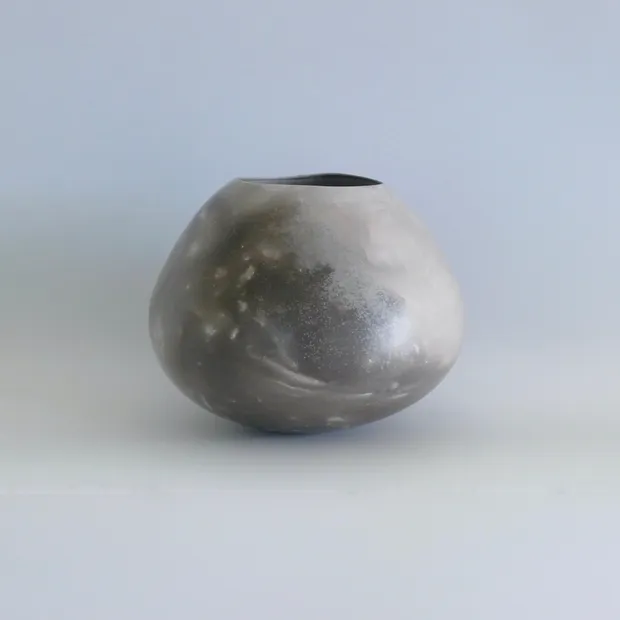
 Jennie McCallStoneware/oxides/glazesRoss SandsHeight: 32cm, Width: 35cm
 -
Glazed, Unglazed, and Decorated Surfaces: What Each Requires
The surface treatment of a ceramic determines how it should be cleaned and what it is vulnerable to, often more directly than the clay body beneath.
Glazed surfaces are glass-like, non-porous, and generally the most straightforward to clean. Most dust and light soiling can be removed with a soft, barely damp cloth. The vulnerability of glazed surfaces is to abrasion: cleaning with anything harder than a soft cloth risks micro-scratching the glaze surface, which, while often invisible at first, accumulates over time into a dulling of the surface quality. Never use scouring pads, abrasive cleaners, or rough cloths on glazed ceramic art.
Unglazed surfaces, including raw stoneware, burnished clay, and deliberately unglazed areas within a composition, are porous to varying degrees and should be kept dry. Dust them with a soft, dry brush rather than a damp cloth. If an unglazed surface becomes marked, specialist ceramic conservators can advise on appropriate treatment: attempting to clean it with water risks driving the soiling further into the clay body or leaving a tidemark.
Decorated surfaces require the most careful consideration. Underglaze decoration, where colour is applied beneath the glaze layer, is well protected and largely impervious to normal cleaning. Overglaze decoration, applied to the fired glaze surface and then re-fired at a lower temperature, is more vulnerable: the decoration sits in or on the glaze surface rather than beneath it, and abrasive cleaning can damage it. Slip-decorated surfaces, where coloured clay is applied to the clay body in layers before firing, are protected by the firing process but can be sensitive to physical impact at edges and projecting details. Sgraffito-worked surfaces, where marks are cut through layers of slip or glaze before firing, are textured in ways that accumulate dust in their incised channels: clean these with a very soft brush rather than a cloth.
How to Clean Ceramic Art
Most ceramic art in good condition requires only regular, gentle dusting. This is sufficient to maintain its appearance and should be all that a collector needs to do themselves.
Routine Dusting
Use a soft, clean brush with natural bristles: a watercolour or decorator's brush in a width appropriate to the scale of the piece works well. Brush gently from the top of the piece downward, allowing dust to fall clear rather than being redistributed across the surface. For pieces with significant textural complexity, such as heavily grogged stoneware or works with deep incised decoration, a soft cosmetic brush can reach into recesses that a wider brush cannot.
Do not use compressed air to clean ceramics. The force of compressed air can dislodge any unstable decorative elements or surface treatments, and can drive fine dust particles into porous or textured surfaces rather than removing them.
Light Surface Cleaning
For pieces that have accumulated more than surface dust, a barely damp soft cloth can be used on fully glazed surfaces. Wring the cloth as thoroughly as possible before use: it should feel almost dry. Wipe gently in one direction rather than scrubbing. Allow the piece to dry completely before returning it to display. Do not submerge ceramic art in water or use it in a dishwasher, regardless of whether it is described as functional: the thermal shock and mechanical movement of a dishwasher can damage glaze surfaces, and immersion can penetrate any micro-cracks in the body or glaze.
Any piece that appears to have surface mould, an active stain, or significant soiling beyond normal dust should be taken to a ceramic conservator rather than cleaned at home. Inappropriate cleaning intervention, however well-intentioned, is one of the most common causes of irreversible damage to ceramic works.
Displaying Ceramic Art at Home
The primary consideration in displaying ceramics is stability: every piece should be positioned where it cannot be easily knocked, and larger pieces should be placed on surfaces from which a fall would not be catastrophic. A ceramic work at the edge of a high shelf in a frequently trafficked corridor is at unnecessary risk regardless of its quality.
Shelf lips, museum putty, and purpose-made display stands all provide additional security for pieces that might otherwise be vulnerable to vibration or accidental contact. Museum putty is particularly useful for securing pieces on wooden surfaces that may flex slightly with seasonal changes in humidity. Use it in small, unobtrusive points of contact rather than attempting to adhere the entire base, and check periodically that it has not dried and begun to pull at the surface of the piece.
The height and angle of display affect how a ceramic piece is read. Many vessel forms reveal their full character only when approached at close range and at the correct eye level: a bowl placed too high so that only its rim is visible, or a vase set so low that its shoulder profile cannot be seen, is not being displayed to its advantage. For detailed guidance on display heights and the specific requirements of three-dimensional works in relation to paintings and other wall-hung art, see our guide on how to hang art at home.
-
Jo GiffordPitfired stoneware ceramicsPitfired Vessel #63Height: 10 cm, Diameter: 8 cm
-
Storing and Moving Ceramic Works Safely
When a ceramic piece needs to be stored rather than displayed, wrap it individually in acid-free tissue paper, padding each piece generously and ensuring there is no direct contact between pieces. Do not wrap ceramics in bubble wrap that is in direct contact with the surface: the dimpled surface can leave marks on soft glazes, and plastic traps moisture. Bubble wrap is appropriate as an outer protective layer over tissue-wrapped pieces.
Store pieces in boxes with adequate cushioning between them and the box walls. Heavy pieces should be stored at the base of any stack, with lighter and more fragile pieces above. Label boxes clearly and stack them so that the heaviest are at the bottom. Never store ceramics in a space subject to extremes of temperature or high humidity: the same guidance that applies to displaying pieces applies to storing them.
When moving a ceramic piece, support it from beneath with both hands and hold it close to your body. Do not carry multiple pieces at once. For significant moves, consider professional art handling: specialist handlers have the materials and experience to pack ceramic works safely for transport in ways that are difficult to replicate without that expertise.
Artist-Specific Considerations
The specific care requirements of a ceramic work are shaped by how it was made, and understanding the making process of the artists in your collection allows you to care for their work more precisely.
Judith Davies hand-builds her porcelain Touchstones, Seastones, and Hagstones through pinching and coiling, embedding texture into the clay body before firing. After firing, she applies natural pigments in layers, then washes and sands them back to reveal the marks formed in the making process. This post-firing surface treatment is the critical consideration for care: the pigment layers sit on and within the porcelain surface rather than beneath a protective glaze, making them more vulnerable to abrasion than a conventionally glazed piece. Dust with a very soft, dry brush only. Never use a damp cloth, which risks disturbing the surface pigmentation and leaving tidemarks in the porous areas between colour layers. The tactile, slightly matte quality of Davies’s surfaces is an integral part of the work: anything that alters that surface, however slightly, diminishes the piece. Handle with clean, dry hands and avoid displaying in positions where the work might be picked up frequently by visitors. See Judith Davies’s available works.
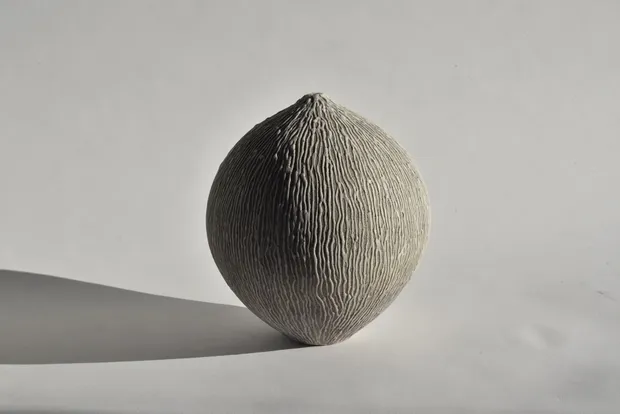
Rowena Gilbert’s stem vases are slip-cast rather than thrown, built from layers of coloured clay slips applied over many weeks before the surface is incised with sgraffito marks that cut through to reveal the underlying colour strata. The resulting surface, with its layered geology of colour and its incised network of marks, is among the most technically complex in contemporary studio ceramics. The sgraffito channels collect dust readily and should be brushed out with a soft, fine brush rather than wiped. The slip layers, while well fused through firing, can be more vulnerable to physical impact at the incised edges than a smooth glaze surface: never clean with anything abrasive. The muted coastal colour palettes of Gilbert’s work are best seen in indirect natural light, which renders the subtle gradations between slip colours most accurately. See Rowena Gilbert’s available works.
-
Janene WaudbyStoneware and mixed mediaMedium Pod Vessel (Grey)Height: 14 cm
Widest Part: 12.5 cmP2 -
Frequently Asked Questions
How do you clean ceramic art?
For routine maintenance, dust ceramic art with a soft, natural-hair brush. For more substantial cleaning of fully glazed surfaces, use a barely damp soft cloth, wiping gently in one direction. Do not use abrasive cleaners, scouring pads, or rough cloths. Do not submerge ceramic art in water or clean it in a dishwasher. Any piece with significant soiling, mould, or surface deposits should be assessed by a professional conservator rather than cleaned at home.
How do you clean glazed ceramics?
Glazed ceramic surfaces can be wiped with a soft cloth wrung almost dry. Use only light pressure and avoid any cleaning agent with abrasive content. Routine dusting with a soft brush is sufficient for most glazed works in good condition. For heavily textured glazes, a soft brush reaches recesses that a cloth cannot without risk of snagging on raised areas.
Is ceramic art fragile?
This depends significantly on the clay body and form. High-fired stoneware and porcelain are dense and durable under normal display conditions. The primary vulnerability of most ceramic art is to impact: a piece that falls or is knocked can fracture or chip in ways that are difficult to repair invisibly. Earthenware is more fragile than stoneware, and pieces with projecting decorative elements or thin walls at the rim are the most vulnerable parts of any ceramic. Appropriate display positioning, away from areas of heavy movement, is the most effective protection.
How should you store ceramic art?
Wrap individual pieces in acid-free tissue paper with generous padding. Do not allow pieces to contact each other directly. Use bubble wrap as an outer layer over tissue, not in direct contact with the surface. Store in a stable environment away from extremes of temperature and humidity, with heavier pieces at the base of any stack. Label storage boxes clearly and avoid placing anything heavy on top of boxes containing ceramics.
Does ceramic art need to be kept out of sunlight?
Direct, prolonged sunlight can cause colour shift in some overglaze decoration and certain glaze types. More practically, strong direct light creates distracting shadows on three-dimensional forms and is inconsistent throughout the day. Indirect natural light is preferable for both display quality and preservation. UV-filtering measures are less critical for ceramics than for paintings and works on paper, but indirect positioning remains advisable for any piece with overglaze or enamel decoration.
What is the difference between caring for earthenware and porcelain?
Earthenware remains porous after firing and is vulnerable to moisture absorption through any unglazed areas, as well as being more susceptible to impact damage than higher-fired bodies. Porcelain is dense, non-porous, and highly refined, but fractures cleanly when struck: its primary care requirement is positional, keeping it where it cannot be knocked. Stoneware sits between these poles, combining durability with a range of surface treatments that each have their specific care considerations.
Can ceramic art be repaired if it is damaged?
Professional ceramic conservators can repair fractures, chips, and cracks with results that range from structurally sound to nearly invisible depending on the nature of the damage and the surface involved. Repair is most successful on clean fractures in unfired surfaces. Attempting home repair with standard adhesives risks making professional conservation more difficult subsequently, as some adhesives are very difficult to reverse. For any significant damage, consult a conservator before attempting any intervention.