A well-cared-for oil painting can last centuries. That is not a promise made lightly: the great canvases of the sixteenth and seventeenth centuries survive not only because of the skill of their makers, but because generations of collectors understood that original works require thoughtful, consistent attention. The oil paintings you bring home from a contemporary gallery deserve the same respect, and the principles involved are far more accessible than you might expect.
This guide covers everything a collector needs to know to protect their paintings at home: how to clean an oil painting safely, how to manage light and humidity, how to store a painting correctly, and when a work needs the care of a professional conservator rather than your own hands. For mixed-media and heavily textured works, which are increasingly common in contemporary Scottish painting, there are additional considerations worth understanding before you pick up a cloth.
For a broader introduction to caring for all types of original art, including ceramics and works on paper, see our complete artwork care guide.
In this guide:
What Oil Paint Actually Is (and Why It Matters for Care)
How to Clean an Oil Painting at Home
What Not to Use When Cleaning an Oil Painting
Protecting Oil Paintings from Light and UV Damage
Temperature, Humidity, and Your Paintings
Handling and Moving Paintings Safely
Special Considerations for Layered and Mixed-Media Works
-
-
How to Clean an Oil Painting at Home
The most common question collectors ask is how to clean an oil painting at home. The honest answer is that your role as a collector is strictly limited to one task: removing surface dust. Everything beyond that requires a professional conservator.
Removing Surface Dust
Dust is the only thing you should attempt to address yourself, and only on works where the paint surface is stable and not already showing signs of flaking or cracking. Use a soft, natural-hair brush with loosely held bristles: a sable or squirrel-hair brush of the kind used in watercolour painting works well. Hold the brush lightly and sweep across the surface with minimal pressure, working from the top of the painting downward. Do not press into the paint surface. Do not use synthetic brushes, which can generate static and attract more dust. Work in good light so you can see what you are doing.
If the surface feels fragile, if you see paint that is raised, flaking, or powdery, or if the work has any visible cracking, stop immediately and consult a conservator before touching the surface at all. The risk of dislodging paint flakes is far greater than the benefit of removing dust.
Surface Grime and Yellowed Varnish
Older oil paintings often develop a layer of yellowed varnish or atmospheric grime that dulls the colours and flattens the composition. This is a conservation task, not a cleaning task. Varnish removal requires solvents chosen specifically for the varnish and paint layer in question, applied with precision and experience. Attempting this at home, regardless of what you read online, carries a serious risk of permanently damaging the paint beneath. If a painting in your collection has become noticeably darker or yellower, arrange a consultation with a professional conservator.
What Not to Use When Cleaning an Oil Painting
A number of household methods circulate online for cleaning oil paintings, and most of them will cause damage. Saliva, which contains amylase enzymes, has been used by conservators in highly specific and controlled contexts, but is not appropriate for home use. Bread has a similar history and a similar limitation. White vinegar is acidic and will affect both paint layers and canvas. Washing-up liquid, window cleaner, and any product containing alcohol or ammonia should never come near the surface of an oil painting.
Water, even plain water, is not appropriate for cleaning the painted surface of an oil painting. It can cause the canvas to expand unevenly, disturb any water-sensitive pigments, and, if it penetrates to the canvas, encourage mould growth in humid conditions. The only safe surface intervention at home is dry dusting with an appropriate brush.
Protecting Oil Paintings from Light and UV Damage
Light is the primary agent of fading and colour shift in oil paintings. Ultraviolet radiation, present in both daylight and fluorescent lighting, breaks down organic pigments over time in a process that is irreversible. Some pigments are far more vulnerable than others: the organic blues and greens, certain reds, and some mixed colours used by contemporary painters can shift significantly with prolonged exposure.
The practical rule is to keep paintings out of direct sunlight at all times. A painting on a wall that receives direct sun for even a few hours each day is accumulating damage continuously. North-facing rooms are ideal for displaying valuable works, as they receive consistent, indirect daylight without the UV intensity of direct sun. If a painting must be displayed in a brighter room, UV-filtering glazing offers meaningful protection for works on paper and, to a lesser extent, for paintings behind glass.
Artificial lighting deserves the same attention. Halogen and incandescent bulbs produce heat as well as UV, both of which are damaging at close range. LED lighting is significantly preferable, particularly products specified as low-UV. Position directional lighting at an angle rather than close to the surface, and avoid lighting that places the bulb within thirty centimetres of the painting face.
Temperature, Humidity, and Your Paintings
Stable conditions matter more than specific numbers. Oil paintings can tolerate a range of temperatures and humidity levels, but they respond badly to rapid fluctuation. An exterior wall in a Scottish home, subject to cold in winter and condensation in damp weather, is a poor location for a significant work. Similarly, hanging a painting directly above a radiator or fireplace exposes it to heat that dries and contracts the canvas repeatedly, placing cumulative stress on the paint film.
A relative humidity between 45 and 55 per cent and a temperature between 15 and 22 degrees Celsius represents a broadly appropriate range. In practice, what matters most is consistency: avoid rooms where temperature swings significantly between day and night, and be particularly attentive during winter when central heating dramatically reduces indoor humidity. A basic hygrometer, available inexpensively, will tell you whether a room is suitable for displaying original works.
Scotland's climate presents particular challenges. Coastal properties and older stone buildings can experience higher ambient humidity, and the transition between a cold exterior and a heated interior creates condensation risk. If a painting has been stored or transported in a cold space, bring it to room temperature gradually rather than placing it immediately near a heat source.
-
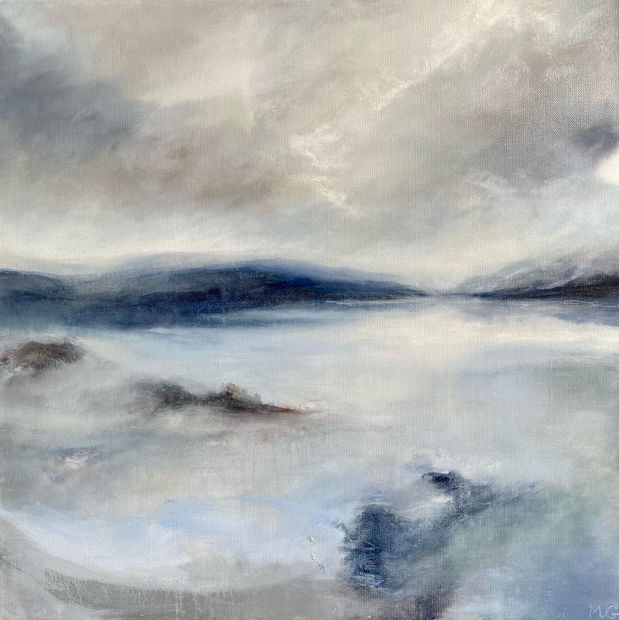
 Madeleine GardinerOil on canvasLuskentyre After RainUnframed Size: 50 x 50 cm
 -
-
When to Call a Professional Conservator
There are clear situations that call for professional conservation rather than home care. If a painting shows paint that is actively flaking or lifting, if the canvas has been torn or punctured, if there is evidence of mould or insect damage, or if the work has sustained water damage, contact a conservator before attempting any intervention yourself. The same applies if you have acquired an older work whose condition history is unknown.
A conservation assessment need not be expensive and is often free as an initial consultation. The Scottish Society for Conservation and Restoration maintains a directory of qualified conservators, and your gallery can recommend specialists with experience in contemporary works. Preventive conservation, which simply means maintaining appropriate conditions, is always less costly than remedial treatment after damage has occurred.
For guidance on displaying your collection to best effect, including advice on placement, scale, and lighting, see our guide on how to choose art for your home. If you have questions about a specific work in your Graystone collection, contact the gallery directly for personalised advice.
Frequently Asked Questions
How do you clean an oil painting at home?
The only cleaning you should carry out at home is dry dusting with a soft, natural-hair brush. Remove surface dust by sweeping lightly across the surface from top to bottom. Any cleaning beyond this, including addressing grime, yellowing varnish, or staining, requires a professional conservator.
Can you clean an oil painting with water?
No. Water is not appropriate for cleaning the painted surface of an oil painting. It can cause uneven expansion of the canvas, disturb sensitive pigments, and create conditions for mould growth. Dry dusting is the only safe option at home.
How do you protect oil paintings from sunlight?
Keep paintings out of direct sunlight entirely. Display in north-facing rooms or spaces with indirect natural light. Use low-UV LED lighting for artificial illumination. UV-filtering glazing provides additional protection where natural light cannot be controlled.
What temperature and humidity is best for oil paintings?
A relative humidity between 45 and 55 per cent and a temperature between 15 and 22 degrees Celsius is broadly appropriate. Stability matters more than specific numbers: avoid rooms with significant temperature fluctuation, proximity to radiators, or exposure to condensation.
How do you store an oil painting safely?
Store paintings upright, not flat. Wrap in acid-free tissue or unbleached cotton, not plastic. Keep away from exterior walls, off floors, and out of spaces with temperature extremes such as lofts or garages. For significant works, a climate-controlled environment is advisable for long-term storage.
Are acrylic paintings cared for differently from oil paintings?
Yes. Acrylic paint can become tacky in warm conditions and brittle in cold ones, which means temperature stability is particularly important. The surface of an acrylic or mixed-media painting should never be stored against other objects, as it can adhere to materials in warm conditions. Dusting principles are the same as for oil: soft natural-hair brush, light contact only.
When should I have an oil painting professionally conserved?
Seek professional advice if you see paint that is flaking or lifting, evidence of canvas damage, mould, insect damage, or water damage. Also consult a conservator before cleaning any older work whose condition history is unknown, or any contemporary work with complex mixed-media or heavily textured surfaces.